


Flashy, confident, and hyper-connected—but is Gen Z losing depth and focus? Discover the dark reality behind the digital generation.
Generation Z—those born between 1997 and 2012—are the first generation to grow up fully immersed in smartphones, social media, and now artificial intelligence tools. They are confident, expressive, digitally fluent, and socially aware.
They are also the most distracted generation in modern history.
The contrast is striking.
On the surface, Gen Z appears bold, stylish, and unstoppable.
But beneath that confidence, many researchers and educators are observing:
- Shorter attention spans
- Reduced reading endurance
- Surface-level knowledge consumption
- Increased anxiety and comparison pressure
So the real question is not
“Is Gen Z less capable?”
The real question is
Are we designing an environment that weakens depth while rewarding speed?
Love Stores Memories, Technology Stores Data

Sometimes I complain to my parents that I don’t have any childhood pictures.
I want to see how I looked as a baby.
But whenever they tell my childhood stories, their eyes shine and their voices soften.
My mother smiles and says I was chubby with messy hair.
My father laughs, remembering how I fell while learning to walk—but always stood up again.
Every time they tell these stories, they add something new.
My childhood feels alive in their words.
Then I realize:
Maybe it’s better that I don’t have hundreds of photos.
If I had them, I might have looked a few times and forgotten them.
The emotion in my parents’ storytelling feels real and fresh every time.
Technology stores images.
Love stores memories.
Gen Z: A Fully Digital Generation
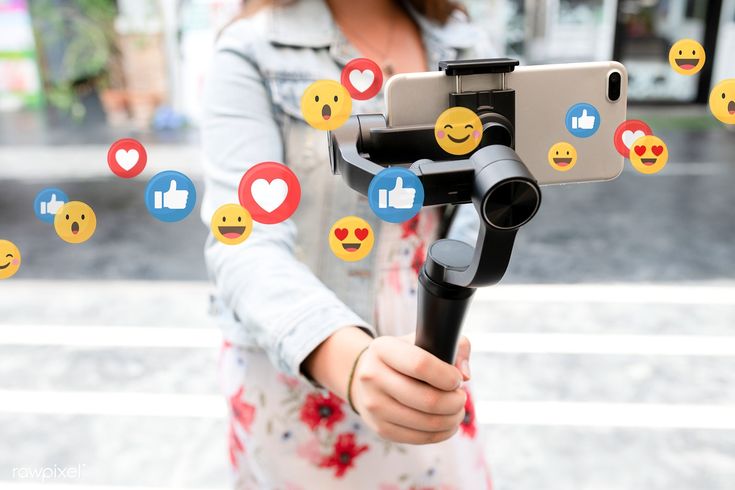
They are the first generation that:
- Grew up with smartphones
- Used the internet from early childhood
- Study with AI tools
- Live with social media every day
Today we see:
- A 6-month-old baby watching a phone to stop crying
- A 3-year-old refusing to eat without YouTube
- A 10-year-old addicted to online games
The Food & Screen Reality
In My Childhood:
- I still remember when we used to cry for food.
- In a big joint family, whatever was cooked had to be shared.
- You never got everything fully—without crying, you wouldn’t even get one extra bite.
- Every bite had value.
Today’s Reality:
- Now parents cry that their child doesn’t eat.
- Without TV or mobile, not even one bite goes down the throat.
- So many varieties of food are placed in front of them, yet there are only tantrums.
- Many food options, but no gratitude.
Two Major Problems I see:
- Children don’t understand the importance of food, so in the future they may never value it.
- Mobile addiction gets attached to eating time.
The Hidden Question:
- When a child eats while watching a screen, digestion and awareness both suffer.
- The body may be eating, but is the food truly nourishing the child?
According to education trend reports, including assessments by the OECD, there are some concerns:
Busy Parents, Lazy Children

- Giving mobile is no longer a compulsion—it has become a trend.
- Even housewives sometimes hand a phone to a 6-month-old baby so the child watches cartoons and doesn’t cry.
- Crying child → screen.
- Bored child → online game.
- Child not eating → cartoon.
Serious Concern:
- News reports frequently show children injured because they were distracted by mobile phones.
- Reduced outdoor activity.
- Decreased patience and attention span.
Children are not born lazy—they are shaped by their environment.
Real Life vs. Social Media Vibe
For Gen Z especially, constant exposure to polished, filtered content creates silent pressure. You watch someone’s “best moments” daily and unknowingly compare them to your ordinary days. Slow progress starts feeling like failure. Instead of asking, “Am I growing?” the question becomes, “How do I look?” Confidence shifts from inner strength to outer validation. Likes boost mood; low engagement creates self-doubt.
The real danger is not social media itself—it’s when the online vibe becomes more important than offline reality. When image matters more than identity. When performing, happiness replaces building it.
Real life builds depth through patience and struggle.
Social media builds display through visibility and attention.
High Knowledge, Low Storage
- Unlimited information access (Google, AI, YouTube).
- Assignments were completed quickly using AI.
- Answers are available instantly.
But:
- Information is searched, not remembered.
- Memory power weakens.
- Critical thinking reduces.
- Knowledge is stored in devices, not in the brain.
Big Question:
Are we raising intelligent thinkers—or efficient searchers?
Who Is Responsible?

When we say, “Gen Z is falling behind in focus,” the easiest thing to do is blame the children. But children do not design the system they grow up in. They simply adapt to it. If we analyze deeply, nearly 80% of the responsibility lies with parents, policymakers, educational systems, and the overall digital environment we have created around them.
1️⃣ Parents: Convenience Over Conscious Parenting
Early exposure without boundaries is one of the biggest concerns.
A smartphone in a toddler’s hand is not accidental anymore—it is normalized.
Parents are not careless; they are exhausted. Work pressure, household responsibilities, and social comparison push them toward convenience. A crying child is quiet with a screen. A bored child becomes engaged with cartoons. A child refusing to eat watches videos during meals.
But here is the psychological shift:
- Screen becomes emotional support.
- Device becomes distraction therapy.
- Silence becomes digital, not relational.
Without structured limits, children don’t learn self-control.
When stimulation is constant, patience never develops.
The problem is not love—it is lack of digital boundaries.
2️⃣ Schools: Digital Learning Without Digital Discipline
Many schools proudly promote “smart classrooms,” tablets, AI-based assignments, and online submissions. While digital literacy is important, balance is missing.
When learning becomes fully screen-based:
- Writing skills decline.
- Memorization capacity weakens.
- Deep reading habits reduce.
- Critical thinking shifts to quick searching.
Children are trained to access information, not absorb it.
Technology in education should assist thinking—not replace it.
A generation cannot build strong cognition if every answer is externally stored.
3️⃣ Government & Policy Gaps
In many countries, discussions about screen-time limits, gaming restrictions, and digital well-being policies are growing stronger. However, regulations are often reactive, not preventive.
Key concerns:
- No clear nationwide age-based smartphone guidelines.
- Weak enforcement on gaming hours for minors.
- Limited public awareness campaigns on early brain development and screen exposure.
- Lack of structured digital-discipline curriculum in schools.
Technology companies innovate rapidly.
Policies evolve slowly.
This gap leaves children exposed to a powerful digital ecosystem without psychological protection.
4️⃣ System Design: Attention Economy
Beyond parents and schools, we must understand something deeper—digital platforms are designed to hold attention.
Algorithms reward:
- Continuous scrolling
- Instant gratification
- Short-form stimulation
- Dopamine-driven engagement
A developing brain is highly sensitive to this design.
It is not about weak willpower—it is about neurological vulnerability.
When children grow up in an environment engineered for addiction, self-regulation becomes extremely difficult.
Other Countries’ Regulations vs. India
- Some European countries promote “screen-free school hours.”
- Australia and parts of the US encourage digital well-being programs.
- China has strict gaming time regulations for minors.
In India:
- Smartphone access is increasing rapidly.
- No strong nationwide screen-time regulation.
- Digital literacy programs exist, but digital discipline policies are limited.
India is adopting technology fast—but is it preparing children emotionally?
What Can We Do? —As Parents & As Government
👨👩👧 As Parents
1️⃣ No-ScreenMeal Rule
Keep all devices away during meals.
This improves focus, digestion, and family bonding.
2️⃣ Delay Personal Smartphones
Avoid giving children personal smartphones at an early age.
Late exposure reduces addiction risk and protects brain development.
3️⃣ Encourage Memorization & Mind Games
Promote mental math, storytelling, reading, and logical games.
This strengthens memory, focus, and critical thinking.
4️⃣ DailyOffline Family Hour
Fix one hour daily as a no-device time for the whole family.
This builds communication and emotional connection.
5️⃣ Outdoor Physical Activities
Encourage sports and physical play.
It improves concentration, discipline, and emotional stability.
6️⃣ Be a Role Model
Children copy behavior.
If parents reduce screen time, children will follow.
🏛 As Government
1️⃣ National Digital Discipline Guidelines
Clear age-based screen-time recommendations are necessary.
2️⃣ Awareness Campaigns
Educate families about early screen exposure risks and brain development.
3️⃣ Balanced Education Policy
Promote a mix of offline learning and digital tools, not complete dependence.
4️⃣ Community Infrastructure
Develop safe public spaces that encourage outdoor engagement.
5️⃣ Stronger Digital Safety Laws
Ensure child-safe online environments and regulate addictive digital patterns.
A world where speed is rewarded more than depth.
Where attention is constantly pulled by screens.
Where information is unlimited, but reflection is rare.
If we truly care about the next generation, the question should not be:
“What is wrong with Gen Z?”
The real question is:
“What kind of digital world are we asking them to grow up in?”
Because the future of this generation will not only be shaped by technology.
It will be shaped by the limits, values, and wisdom we choose to build around it.
Thank you for reading this. 💛