Why Mindset Matters More Than Talent
Many people believe that success depends on intelligence, talent, or luck. But research in psychology shows something deeper: success depends largely on mindset—the way we think about ourselves, our abilities, and our challenges.
Mindset is not just positive thinking. It is the internal belief system that quietly decides:
- How we handle failure
- How we respond to criticism
- Whether we grow or stay stuck
What Is Mindset?

Mindset is the set of beliefs we hold about:
- Our intelligence
- Our abilities
- Our potential
These beliefs operate silently, but they strongly influence our decisions, emotions, and actions.
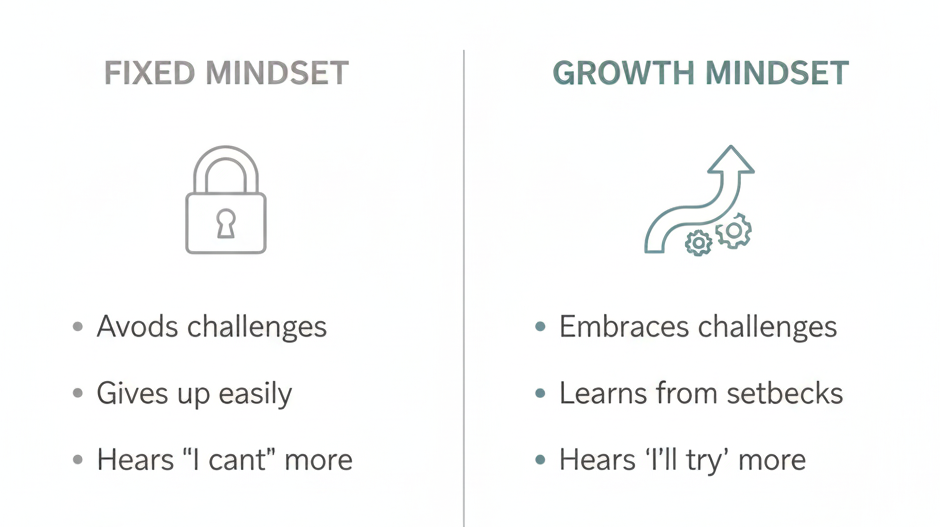
Dr. Carol Dweck identified two main types of mindset
- Fixed Mindset
- Growth Mindset
1. Fixed Mindset: When Growth Feels Unsafe

A fixed mindset believes that abilities are permanent.
Core Beliefs of Fixed Mindset
- “I am either good at this or not.”
- “If I fail, it means I am not capable.”
- “Effort means I lack talent.”
Life-Based Example
Example: A Student A student scores low marks in mathematics and concludes:
“I am bad at math.”
Because of this belief:
- The student avoids practice
- Feels anxiety before exams
- Stops asking questions
The problem is not intelligence. The problem is belief.
Emotional Impact
A fixed mindset creates:
- Fear of failure
- Shame around mistakes
- Comparison with others
2. Growth Mindset: When Learning Becomes Possible

A growth mindset believes that abilities can be developed through effort, learning, and time.
Core Beliefs of Growth Mindset
- “I can improve with practice.”
- “Failure teaches me something.”
- “Effort is the path to mastery.”
Life-Based Example
Example: Same Student, Different Mindset Instead of saying “I am bad at math,” the student says:
“I don’t understand this yet.”
Because of this belief:
- The student practices more
- Asks for help
- Tries different learning methods
Slowly, confidence grows.
Visual Thinking Model: Mindset Flow
You can imagine mindset like a simple flow:
Event → Belief → Response → Result
Fixed Mindset Flow
Failure → “I’m not capable” → Avoid effort → No growth
Growth Mindset Flow
Failure → “I can learn” → Practice & feedback → Improvement
The event is the same. Only belief changes the outcome.
Mindset in Relationships: Why It Matters

Expectation vs Reality
A fixed mindset expects people to never change.
A growth mindset understands that people evolve with time, experiences, and effort.
Handling Conflicts
With a fixed mindset, conflicts feel like threats.
With a growth mindset, conflicts become chances to understand, not to win.
Communication Style
Mindset decides whether we listen to reply or listen to understand.
Healthy relationships are built on curiosity, not assumptions.
Blame vs Responsibility
A fixed mindset looks for who is wrong.
Growth mindset looks at what can be improved—together.
Emotional Safety
A growth mindset creates space where emotions can be expressed without fear of judgment or rejection.
Growth Together, Not Apart
Relationships don’t fail because of mistakes—they fail when learning stops.
Letting Go of Ego
Mindset teaches us that being right is less important than being connected.
Long-Term Bonding
Love survives when both people believe effort, patience, and understanding matter more than perfection. Listen and stay patient.
Mindfulness and Mindset: A Powerful Connection
Mindfulness helps us observe our thoughts without becoming them.
When we are mindful:
- We notice fixed thoughts (“I can’t do this ”)
- Without believing them completely
Mindfulness creates space. Growth mindset fills that space with learning.
Mindfulness + Growth Mindset = Sustainable inner growth
How to Shift from Fixed to Growth Mindset (Practical Steps)
1. Change Your Inner Language
Replace:
- “I can’t” → “I’m learning”
- “I failed.” → “I learned something.”
2. Respect Effort
Effort is not weakness. It is evidence of growth.
3. Welcome Feedback
Feedback is information, not judgment.
4. Practice Awareness
Notice when fear stops you from trying.
Common Misunderstandings About Growth Mindset
Growth mindset does not mean:
- Always being positive
- Ignoring difficulties
It means:
- Accepting difficulty
- Continuing despite discomfort
Mindset quietly shapes:
- Who we become
- What we attempt
- How deeply we live
Talent may open doors, but mindset decides how far we walk.
The most powerful shift is not external success—but internal freedom.
You don’t need to change who you are. You only need to change how you relate to learning, failure, and growth.
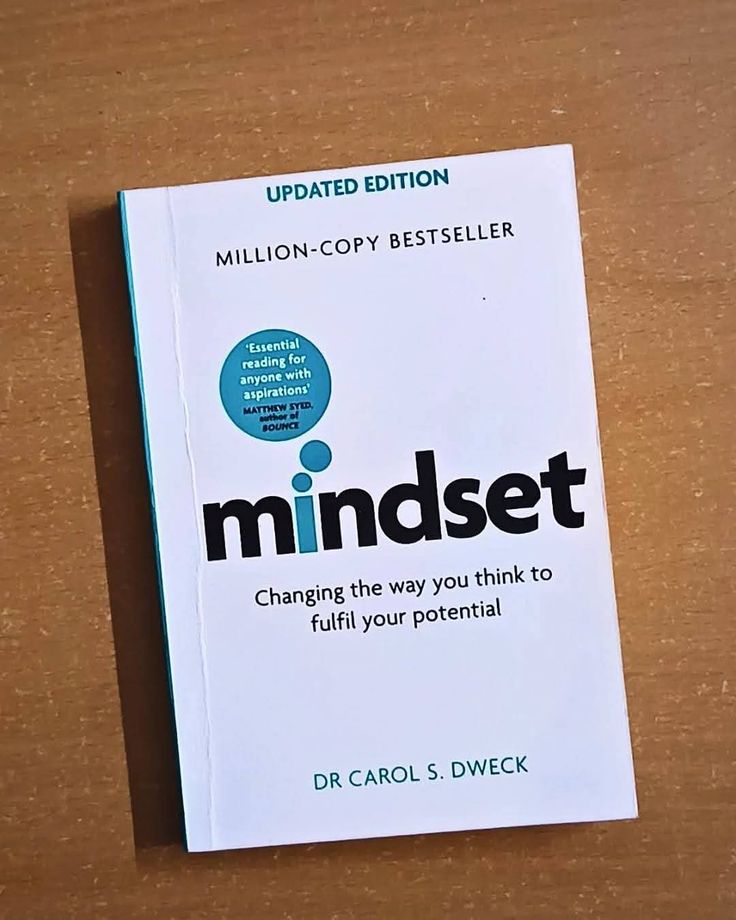
A powerful book that explains how our beliefs shape learning, failure, and personal growth—and why it’s never too late to change the way we think.