

Sleep is not laziness—it is a basic need for a healthy mind and body. Even before we open our eyes, a routine fills our ears. This is especially true in Indian families. Since childhood, we have grown up hearing elders call us to wake up early, often linking discipline with less sleep.
This is not just a voice…
It is someone’s everyday alarm.
For some, it feels like a rap song.
For some, like a daily radio playing in the background.
And for others, it comes with taunts, idioms, and even scolding…
“You’re sleeping like you sold horses.”
“You’ve become Kumbhkaran.”
“You’re so lazy.”
These are the things we hear almost every day.
They say that if a lie is repeated again and again, it starts to feel like the truth. Similarly, we have constantly called a resting person “lazy.” We have slowly started believing it ourselves. In the process, we have become not just lazy, but unhealthy too.
India’s Sleep Crisis
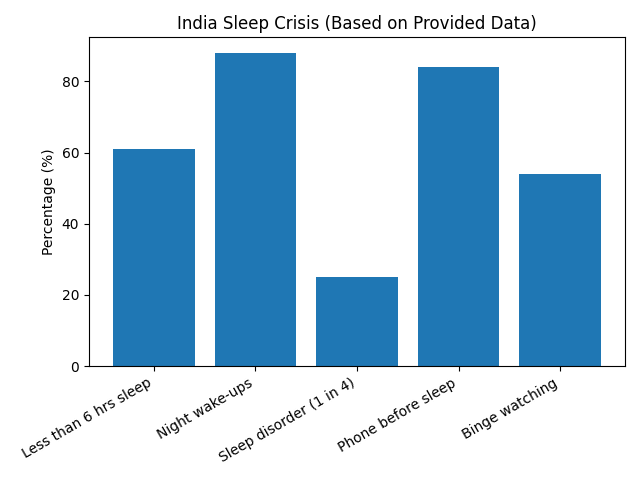
People in India are sleeping less—and this is not just tiredness. It is like a slow damage that is silently affecting both our health and our economy.
- More than 61% of people are not getting even 6 hours of sleep
- 88% of people wake up multiple times during the night
- 1 out of every 4 people is facing sleep-related problems
Because of this, India loses nearly ₹29,000 crore every year.
What’s Really Happening

Women are more affected by lack of sleep. Due to household responsibilities and hormonal changes, women feel around 20% more tired than men.
At the same time:
- 84% of people use their phones before sleeping
- 54% are addicted to social media and binge-watching
Binge-watching means watching shows continuously without breaks.
Environmental factors also play a role. In cities, noise affects sleep, while in villages, heat becomes a problem.
According to the Indian Council of Medical Research, the impact on health is increasing rapidly.
Meanwhile, countries like Japan and the United States are creating proper sleep guidelines, while India is slowly losing its productivity.
Even today, many people think sleep is “laziness” and continue to ignore its importance.
According to the National Sleep Policy Recommendations (India), a healthy person needs 7 to 9 hours of sleep.
It All Starts at Home
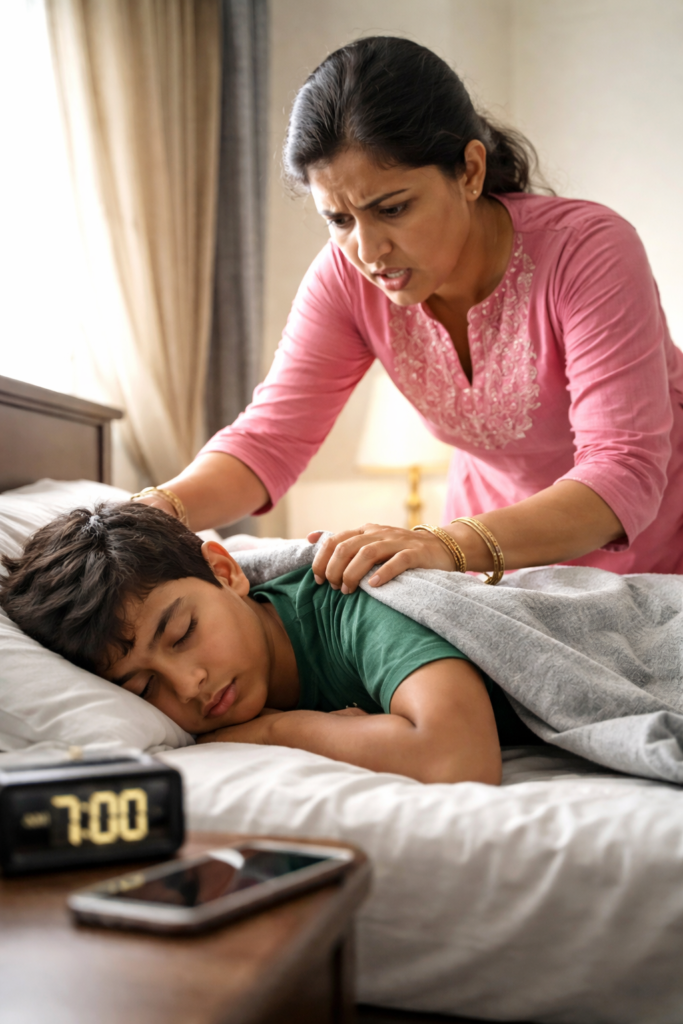
Parents have always told us to wake up early. They say we should study in the morning because the mind is fresh. Waking up early helps keep better health. They also recommend against sleeping in the evening.
We have heard these things since childhood—and they are 100% true.
But often, in anger, we say, “You don’t understand anything.”
Today, if we think deeply, we realize that parents are mostly right.
Why?
Because they have lived life. They have seen things. Their knowledge comes from real experience.
Today’s reports also suggest that the new generation’s thinking ability and focus are decreasing. The main reasons are smartphones, social media, and lack of sleep—and all of this starts from our daily habits.
A Truth Parents Also Need to See

At the same time, parents also need to understand something.
Nowadays, many parents themselves stay awake late at night using mobile phones while their child has school in the morning.
Children wake up and get ready, but they are still half-asleep. They go to school in that same tired state.
Now it is important to understand the next:
Sleep is not just about waking up early
It is about waking up fresh
Corporate Life: High Salary, Low Sleep
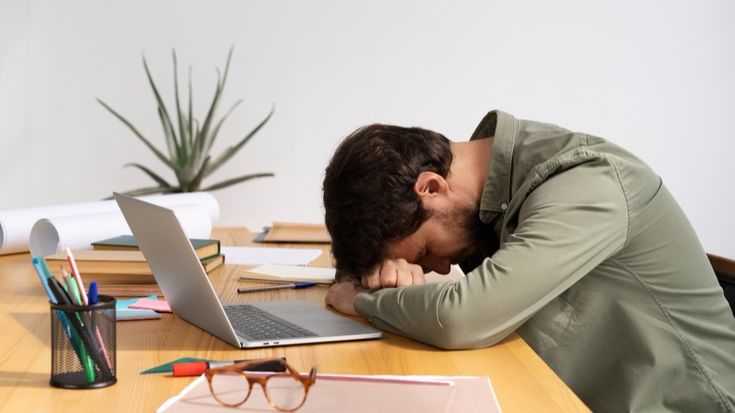
Sleep problems are highest in the corporate sector.
An 8–9 hour job often becomes 10–12 hours. People work late at night, and their sleep schedule gets disturbed.
There is also pressure to be “always available”—emails, calls, and messages never stop. The mind never truly rests.
Deadlines, targets, and job insecurity increase overthinking, making it harder to sleep.
On top of that:
- Too much screen time
- Excess coffee
- No physical activity
All of this reduces sleep quality.
For women, it is even more difficult because they handle both office work and home responsibilities.
What Other Countries Are Doing

Some countries have strict rules to protect people’s sleep and health.
In France, there is a “right to disconnect”—employees are not obligated to respond after work hours.
In Germany, working hours are fixed, and overtime is limited.
In Japan, steps are being taken to reduce overwork.
These countries understand that productivity comes from rested and healthy people, not tired ones.
Women’s Sleep: The Hidden Struggle
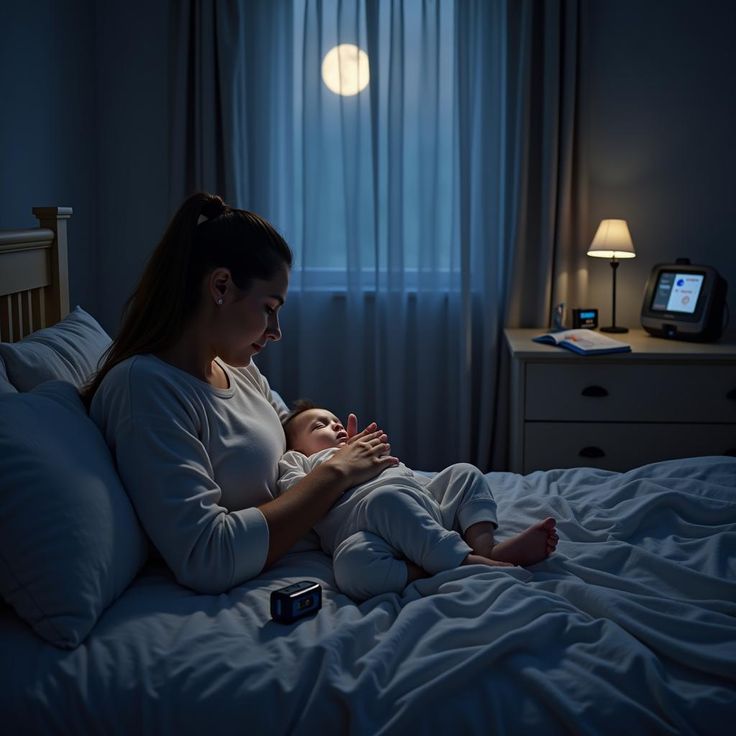
Sleep problems are more serious for women.
Women feel around 20% more tired than men, and their sleep is disturbed more often.
For mothers with small children, sleep breaks many times at night due to the baby crying or needing care. This prevents deep sleep and affects health.
They also deal with:
- Household responsibilities
- Emotional pressure
- Hormonal changes
Even after a full day, their mind does not easily relax.
But if the husband is supportive and shares responsibilities, things can improve a lot.
Some facts:
- Insomnia is more common in women
- Working women face a double burden
- Sleep is most affected after childbirth
- Lack of sleep increases stress and anxiety
A woman’s sleep depends not just on her habits but also on family support.
7 Truths India Needs to Accept
1. Women’s Health, Family Stability
Poor sleep in women doesn’t stay personal — it disturbs the emotional balance of the entire family.
2. Sleep-Deprived Students, Compromised Future
Lack of sleep weakens focus and memory, quietly damaging a student’s long-term potential.
3. Sleep Loss, Deadly Roads
Even a few seconds of drowsiness can turn into life-threatening accidents.
4. Exhausted Workers, Declining Productivity
Without rest, people don’t execute—they just show up, leading to consistent output loss.
5. Sleep Debt, Mental Health Crisis
Chronic sleep loss fuels anxiety and overthinking, creating a silent mental health burden.
6. Tired Parents, Disconnected Children
When parents lack energy, children lose guidance—and screens take that place.
7. Poor Sleep, Rising Health Burden
Sleep deprivation increases lifestyle diseases, adding pressure on families and healthcare systems.
What Can We Do to Improve Our Sleep?

In the end, one thing is clear:
Change does not come from rules
It comes from mindset
And it must start at home.
Parents need to understand that a child’s sleep is not a small thing—it is the foundation of their life. If a child grows up with proper sleep and a healthy routine, they will always value health in the future. A person’s health and freshness positively impact everyone around them. They work better and think better. This creates a positive environment.
Corporate companies also need to understand that sleep loss can damage a country’s economy. It can also harm their own company through low productivity. Burnout is another potential consequence.
Schools also need change. High fees and unnecessary projects are increasing pressure on children and parents, affecting sleep and mental health. In the name of “smart” and “digital,” children are losing focus, patience, and natural learning ability. Now is the time to bring awareness. We should follow research and give children the right knowledge. This way they can grow up healthy, independent, and mentally strong.
At the same time, we also need to understand the mindset of today’s Gen Z. For many young people, staying awake late at night feels “cool” or productive. Social media, late-night scrolling, and the idea of “hustle culture” have made sleepless nights look like a symbol of success. In some situations, like studying, building a career, or chasing a goal, people need to stay awake at night. This is true and completely fine if it is done with awareness and balance.
But the problem begins when it turns into a daily habit or a trend that people follow blindly. Making late nights a lifestyle without caring about sleep, health, and recovery is not ambition—it is damage in slow motion.
Lack of sleep affects memory, focus, emotional stability, and long-term health. So if staying awake at night is necessary, it should be done responsibly, with proper rest planned.
If it becomes just a habit or a trend, it is a mistake. This mistake starts harming you from today itself.
Sleep is not laziness.
It is the foundation of a healthy life.
Very informative
Thank you, Tai.
Very useful information 👍
Thank you