
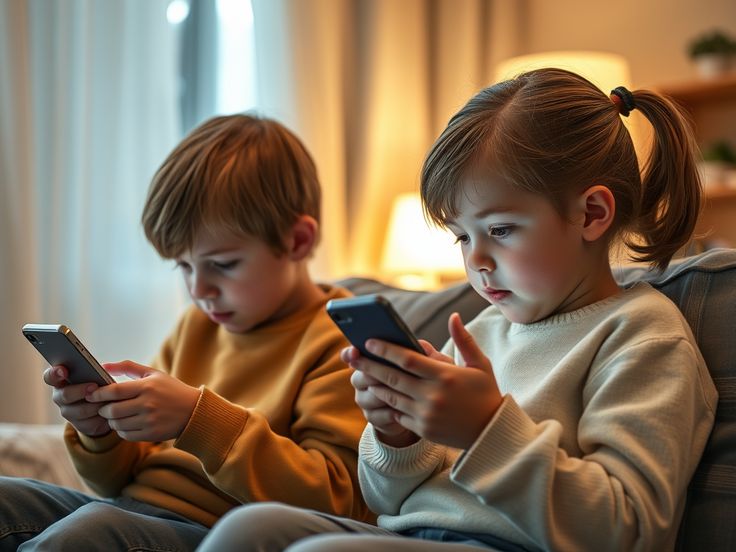
“मुलाचे पाय पाळण्यात दिसतात” (“A Child’s Future Can Be Seen Early”) is a proverb that has been passed down through generations. In today’s digital world, one of the earliest and most noticeable trends is the rise of children’s smartphone addiction, with many children becoming attached to screens long before their true interests, talents, and abilities have a chance to develop.
This growing dependence on smartphones is no longer seen as just a parenting challenge; it is increasingly being recognized as a new national emergency affecting an entire generation.
However, in today’s digital era, this saying seems to have taken on a different meaning.
For many children today, it is no longer their early qualities that stand out first—it is the smartphone in their hands.
Why Has Children’s Smartphone Addiction Increased So Rapidly?

1. Smartphones Have Become the Modern “Babysitter”
Today, many parents are busy with work and daily responsibilities. As a result, smartphones are often used to keep children occupied.
- Child is crying? Give them a phone.
- Child is not eating? Play a video.
- Child is bored during travel? Hand over a smartphone.
- Parents need some quiet time? Give the child a screen.
At first, this seems harmless. However, when children repeatedly receive a phone whenever they are bored, upset, or restless, they start depending on it for comfort and entertainment. Gradually, the smartphone becomes a need rather than just a tool.
2. Social Media and Short-Video Platforms Are Designed to Keep Children Watching
Platforms like YouTube Shorts, Instagram Reels, and other short-video apps are designed to capture attention for as long as possible.
- Every swipe shows something new and exciting.
- Each new video releases dopamine, the brain’s “reward chemical.”
- Dopamine creates feelings of pleasure and satisfaction.
- Children begin craving more videos to experience the same feeling.
- This makes it difficult to put the phone down.
Over time, children may find normal activities like reading, studying, or playing outside less interesting compared to the instant entertainment provided by their screens.
3. Outdoor Play and Social Interaction Have Decreased
Childhood today looks very different from previous generations.
- Less time is spent playing outdoors.
- Many children have limited access to playgrounds and open spaces.
- School, tuition classes, and indoor activities take up most of their day.
- Face-to-face interaction with friends is often replaced by online communication.
As outdoor play and real-world social activities decrease, smartphones naturally become the main source of entertainment. Unfortunately, screens cannot fully replace the physical activity, creativity, friendships, and life experiences that children gain through real-world play.
Scientific Effects of Smartphone Addiction on Children

1. Impact on Brain Development
A child’s brain develops rapidly during the early years of life. During this critical period, the brain forms connections that support learning, attention, memory, and emotional regulation.
Excessive screen time can interfere with this development.
- It may reduce a child’s ability to focus and concentrate.
- Constant exposure to fast-changing videos trains the brain to expect continuous stimulation.
- Children may find it harder to stay engaged in activities that require patience and deep thinking.
- Schoolwork, reading, and problem-solving can become more challenging.
As a result, children’s smartphone addiction may make it difficult for children to maintain attention in classrooms and other learning environments.
2. Impact on Language Development
Children learn language primarily through interaction with people, not screens.
They develop communication skills by listening, speaking, observing facial expressions, and participating in conversations with parents, siblings, teachers, and friends.
- More screen time often means less face-to-face communication.
- Fewer conversations can slow language development.
- Some children may experience delayed speech.
- Vocabulary growth may be limited.
- Communication and social interaction skills may not develop as strongly as expected.
Human interaction remains one of the most important factors in building strong language and communication abilities. However, children’s smartphone addiction can reduce valuable opportunities for these real-life interactions.
3. Sleep Problems
Mobile screens emit blue light, which can affect the production of melatonin, the hormone responsible for regulating sleep.
When children use smartphones before bedtime, their natural sleep cycle can be disrupted.
As a result:
- They may take longer to fall asleep.
- Sleep quality may decrease.
- Fatigue and tiredness can increase during the day.
- Learning, memory, and concentration may suffer.
Poor sleep can have a significant impact on both academic performance and overall health. In many cases, children’s smartphone addiction can make these sleep-related problems even worse.
4. Impact on Mental Health
Studies suggest that excessive screen time can affect a child’s emotional well-being.
Children who spend long hours on smartphones may be more likely to experience:
- Irritability and mood swings
- Anxiety and stress
- Feelings of loneliness
- Emotional instability
- Difficulty managing emotions
When digital interaction replaces real-world relationships and activities, children may find it harder to develop healthy emotional coping skills. Research increasingly shows that children’s smartphone addiction can contribute to emotional and mental health challenges.
5. Impact on Physical Health
Spending extended periods sitting and using a smartphone can also affect physical health.
Common problems include:
- Obesity and unhealthy weight gain
- Eye strain and vision-related discomfort
- Neck and back pain caused by poor posture
- Reduced physical fitness and stamina
- Lower levels of daily physical activity
Regular movement, outdoor play, and exercise are essential for healthy growth, but children’s smartphone addiction often reduces the time children spend being physically active.
6. Impact on Eating process
Many children use smartphones while eating, but this habit can negatively affect their health.
- Children become distracted and do not focus on their food.
- They may eat too much or too little without realizing it.
- The brain receives weaker signals about hunger and fullness.
- Digestion can be affected because children often eat mindlessly and chew less carefully.
- Over time, this can lead to poor eating habits, weight-related problems, and nutritional deficiencies.
Experts recommend keeping mobile phones away during meals so children can focus on eating and develop healthier habits.
Healthy eating is not just about the food on the plate—it is also about being mentally present during meals. Experts recommend keeping screens away during mealtimes so children can focus on eating, enjoy family conversations, and develop healthier eating habits.
What Price Might Children Pay in the Future?

The effects of mobile addiction are often not visible immediately. The real consequences may appear years later as children grow into teenagers and adults.
1. Reduced Ability to Focus
- Constant exposure to short videos can make it difficult to concentrate for long periods.
- Children may struggle with studying, reading, and deep thinking.
- This can affect their education, career growth, and problem-solving abilities in the future.
2. Difficulty Building Real Relationships
- Online communication is easy, but real relationships require patience, empathy, and communication skills.
- Excessive screen time can reduce face-to-face interactions.
- As a result, children may find it harder to build strong friendships and meaningful relationships.
3. Lower Emotional Resilience
- Smartphones provide instant entertainment and instant rewards.
- Children may become less comfortable with waiting, boredom, or disappointment.
- Over time, handling failure, stress, and life’s challenges can become more difficult.
Simple Steps to Prevent Mobile Addiction in Children

1. Be a Role Model
Children learn more from what they see than from what they are told. If parents frequently use their phones during meals, conversations, or family time, children may see this behavior as normal and copy it.
- Avoid constantly checking your phone in front of your child.
- Keep phones away during meals and family conversations.
- Spend dedicated quality time with your child without screens.
- Show that real-life interactions are more important than notifications.
Healthy screen habits start at home. By using technology responsibly, parents can encourage their children to do the same.
2. Create Screen-Free Times
Setting clear boundaries helps children develop a healthier relationship with technology.
For example:
- No phones during meals.
- No screens at least one hour before bedtime.
- No phones during family conversations or activities.
These small rules encourage better communication, sleep, and family bonding.
3. Offer Better Alternatives
Simply taking away a phone is rarely enough. Children need engaging alternatives that are equally rewarding.
Encourage activities such as:
- Outdoor games and sports
- Reading books
- Drawing and painting
- Music and dance
- Creative hobbies and crafts
When children enjoy real-world activities, screens naturally become less attractive.
4. Spend Quality Time With Your Child
Many children do not need more screen time—they need more attention.
- Talk with them regularly.
- Play together.
- Listen to their thoughts and feelings.
- Participate in activities they enjoy.
A child who feels connected to family is less likely to seek constant entertainment from a screen.
5. Avoid Sudden Restrictions
Completely taking away a phone overnight can lead to frustration, arguments, and resistance.
Instead:
- Reduce screen time gradually.
- Set realistic daily limits.
- Replace screen time with enjoyable activities.
- Celebrate small improvements.
Lasting habits are built through consistency, not sudden punishment.
A Simple Truth
Children don’t need a perfect parent. They need a present parent. The most effective way to reduce mobile addiction is not by controlling every screen but by creating a home where real conversations, real experiences, and real connections are more meaningful than what appears on a screen.
A Final Message for Parents 💛

Mobile phones are not the enemy. The problem begins when they start replacing childhood.
Today, many parents give their children a phone to keep them quiet, busy, or entertained. For a few moments, it brings peace. But an important question remains:
Are we sacrificing our children’s future for our present convenience?
Good parenting is not just about earning money, providing a comfortable lifestyle, or fulfilling every need. Children also need something that no device can replace—their parents’ time, attention, and presence.
If we want to protect the next generation, taking away the phone is not enough. We must bring back conversation, play, relationships, and real-life experiences.
Because in the end, a child’s future is not shaped by screens—it is shaped by the people who choose to be present in their life.
Thank you for reading. 💛