
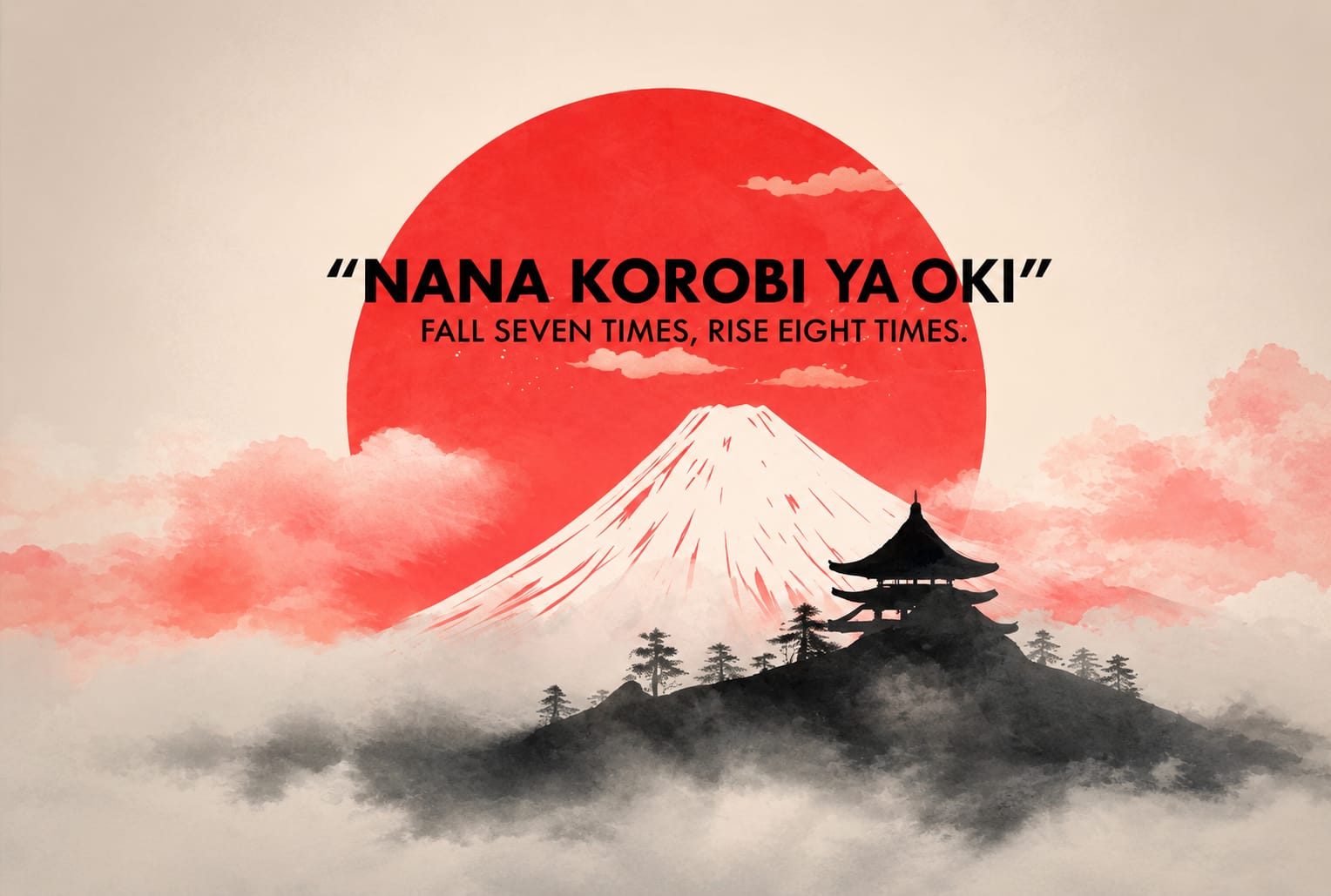
七転び八起き — Nana Korobi Ya Oki
Its meaning is “Fall seven times, rise eight.” At first, it may sound like just another motivational quote. But this philosophy is deeper than simply telling people to “never give up.” It accepts an uncomfortable truth about life: you will fall.
Your plans will not always work. Hard work will not always bring immediate results. Sometimes, you may lose even when you did everything right. But after all of that, one thing can still remain in your hands: how you choose to begin again.
One of the biggest misunderstandings about life is that we often believe strong people never break. We look at successful people and assume they have always been confident, faced fewer failures, and never doubted their path.
But real life is rarely like that. Strong people fail too. They make wrong decisions, face rejection, and watch their plans fall apart. Sometimes, they even lose their sense of direction. The difference is not that they never fall. The difference is that they do not allow one failure to become the final definition of their entire life.
A famous Japanese proverb expresses this idea in a simple but powerful way: Fall seven times, rise eight.
Life Does Not Always Reward Hard Work
We are often taught a simple formula: work hard, keep trying, and success will eventually come. Hard work is important, of course, but life is not always predictable.
Sometimes opportunities do not arrive at the right time. Circumstances change. Other people’s decisions affect our path. Sometimes our plans are simply not as good as we believed they were. So not every failure means that someone did not work hard enough.
Sometimes, life simply does not go according to our plans.
This is where Nana Korobi Ya Oki becomes meaningful. It does not promise that every time you rise, you will succeed. Instead, it reminds us that when one plan ends, your life does not end with it.
Failure can be an event. Making it your identity is a different choice.
Sometimes Falling Forces Us to Stop and Think
We usually see failure as something we should avoid. But sometimes failure shows us things that success hides.
Perhaps we were not fully prepared. Perhaps our strategy was wrong. Perhaps we were chasing a goal that was never truly ours.
Many people spend years walking in one direction because they believe it is the right path. Then failure arrives, and suddenly everything stops. At first, that pause can feel painful. But sometimes, stopping gives us the first real opportunity to ask ourselves: Where was I actually trying to go?
Not every fall takes us backward. Sometimes, a fall brings us back from the wrong direction.
Daruma: The Ability to Return to Your Center
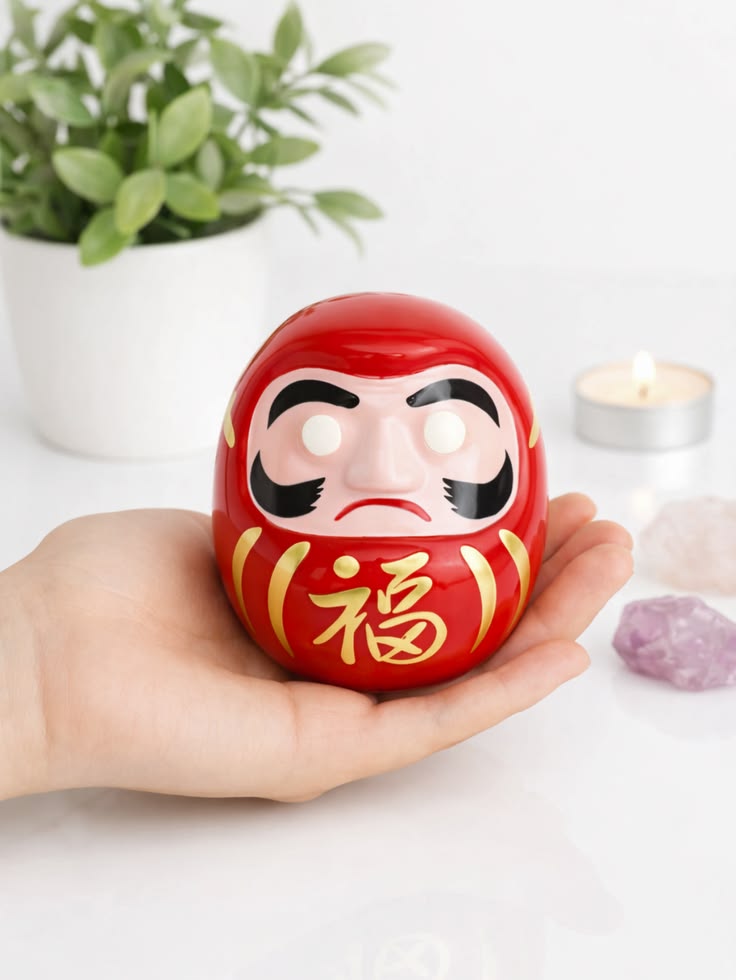
In Japan, the Daruma doll is a well-known symbol of perseverance and resilience. Its rounded, weighted shape allows it to return upright after being knocked over.
But perhaps its deepest lesson is not simply “Fall down and stand up again.”
Life can shake us in many ways. Rejection can damage our confidence. The end of a relationship can make us question ourselves. Career failure can make us uncertain about the future.
The question is not whether life will ever knock you down. It will.
The real question is, can you slowly find your way back to yourself?
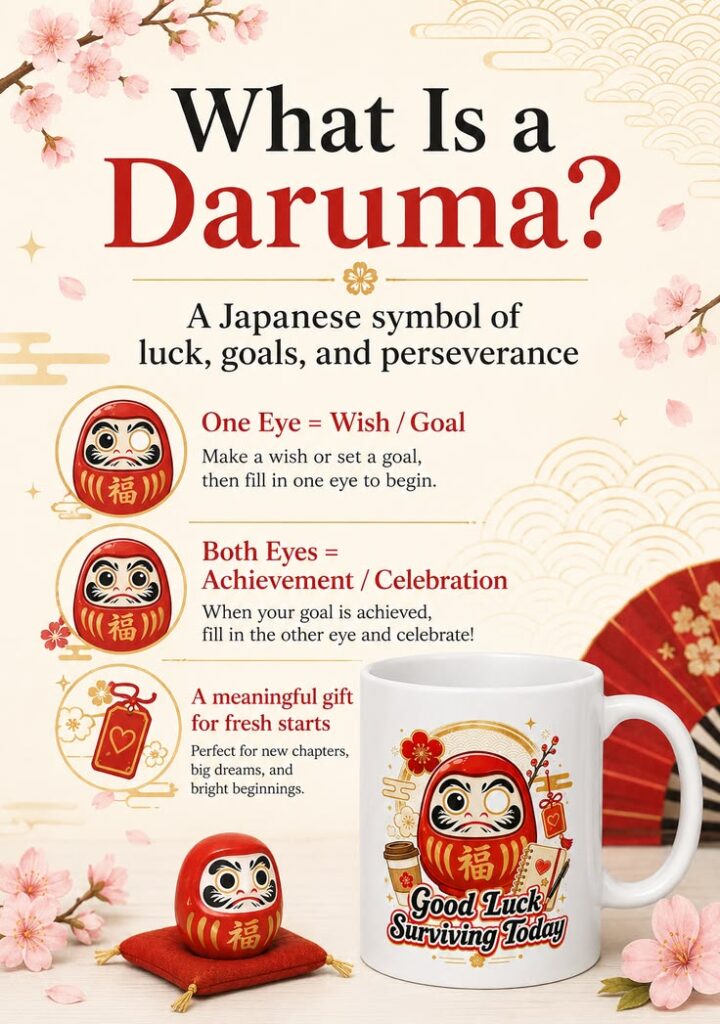
Perhaps that is what resilience truly means. Resilience does not mean that nothing can hurt you. It means that after being hurt, you do not lose yourself completely.
The Person Who Rises Again Is Not Always the same person who fell.
We often think that after failure, we need to become exactly the person we were before. But life does not always work that way.
Some experiences change us permanently. A major heartbreak, a financial loss, the collapse of a dream, or years of hard work ending in disappointment can leave a lasting mark on us.
After such experiences, we are not always the same. And perhaps we do not need to be.
One beautiful interpretation of Nana Korobi Ya Oki is that the person who rises the eighth time may not be the same person who fell the seventh time. Perhaps they are wiser, a little more careful, and less certain about everything—but perhaps more real than before.
Kintsugi: Not Every Broken Thing Needs to Be Hidden
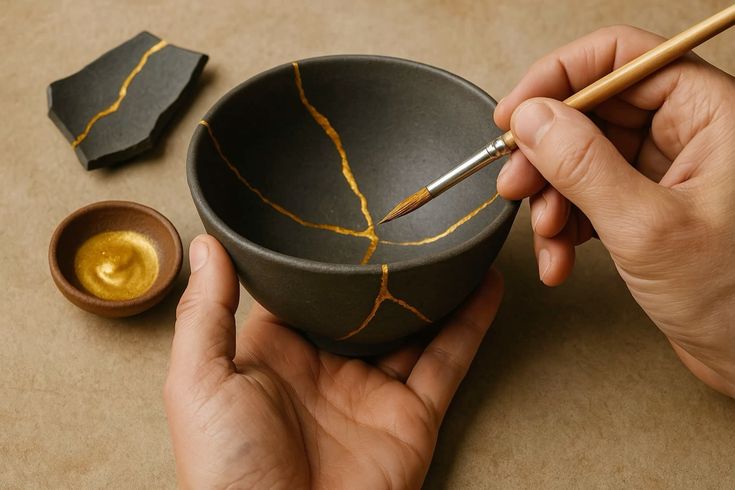
Another beautiful Japanese concept is Kintsugi, the traditional practice of repairing broken pottery rather than simply throwing it away. It offers a powerful metaphor for life.
We often try to hide the broken parts of ourselves. We do not want people to know about our failures. We want our lives to look perfect from the outside.
But real life is not perfect. Some dreams remain unfinished. Some relationships never return. Some mistakes cannot be undone. Some things do not become the same after they break.
But that does not mean they have lost all value.
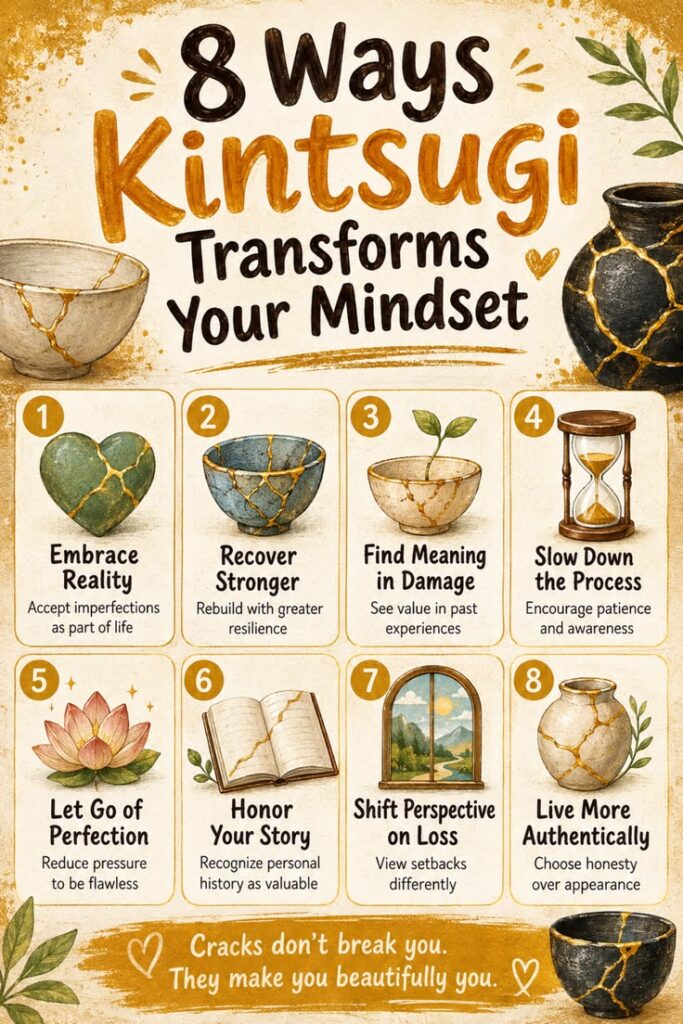
The cracks in our lives are also part of our story.
The cracks remind us that something happened. That we lost something. That we learned something. And somehow, life continued.
Does Never Giving Up Mean Holding On to Everything?
No.
This is where the idea of “never give up” needs to be understood carefully. Leaving the wrong path is not always the same as giving up.
If someone keeps repeating the same mistake without learning anything, that is not resilience. It may simply be stubbornness.
Real resilience looks more like this:
Fall → Understand → Learn → Change → Move Forward
You can change your method. You can change your job. You can change your plans. Sometimes, you can even change your dream.
Changing direction does not mean you have given up on life. Sometimes, the wisest thing you can do is stop, reflect, and choose a different direction.
Do Not Turn Failure Into Your Identity
There is a huge difference between these two sentences:
“I failed.”
And:
“I am a failure.”
The first is an experience. The second becomes an identity.
Failing an exam does not prove that you are unintelligent. Being rejected for a job does not prove that you are incapable. A failed business does not mean you can never build something meaningful.
We often take one event from our lives and allow it to define everything about us. But you are more than your worst day. You are more than your biggest mistake. And you are more than your greatest failure.
Sometimes Rising Again Is a Very Small Step
We often imagine a comeback as something dramatic. We imagine that one day we will suddenly return, everything will change, and our success will become visible to everyone.
But most real comebacks are much quieter.
Sometimes rising again simply means deciding to try one more time. Applying for another job. Opening a book again after months. Asking someone for help. Accepting a mistake. Or simply choosing to move forward for one more day.
Not every comeback needs an audience. Some of the most important victories happen quietly.
What Does Ikigai Really Mean?
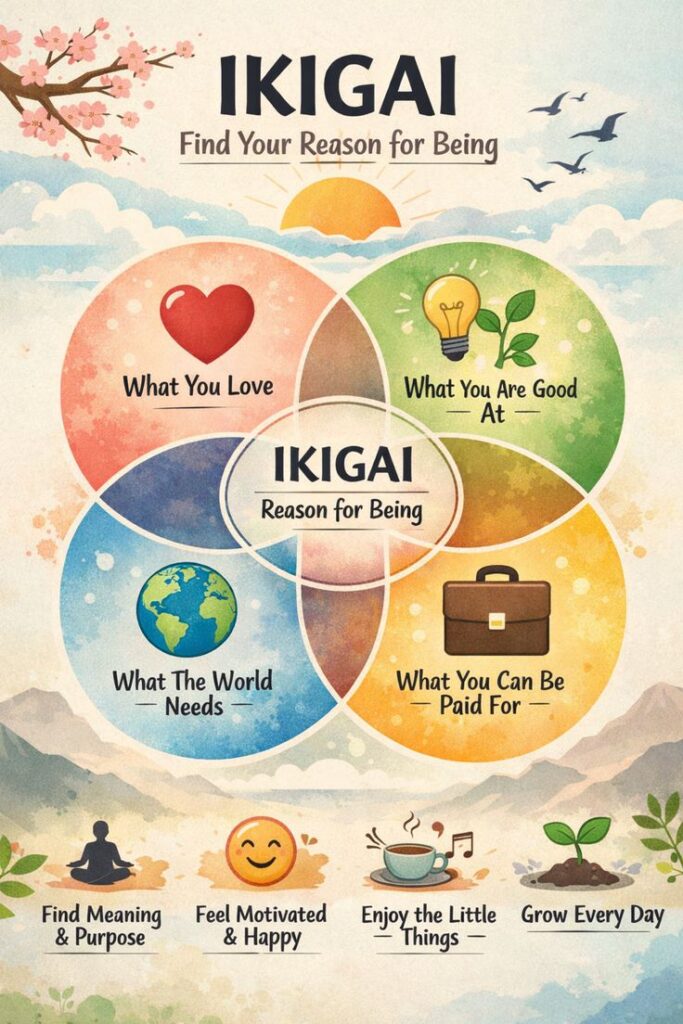
Ikigai is a Japanese concept that can be understood as “a reason for being” or “a reason to wake up every morning.” But its meaning is deeper than simply finding a career or achieving a big goal.
Your Ikigai can be found in the things that make your life feel meaningful—something you enjoy doing, people you love, work that gives you purpose, or even small daily moments that bring you peace.
Ikigai teaches us that we do not always need to search for one extraordinary purpose in life. Sometimes, the reason to live a meaningful life is hidden in ordinary things. It is about discovering what makes you feel connected to your life and gives you a reason to keep moving forward.
Ikigai is not about having a perfect life. It is about having something that makes your life feel worth living.
Life may not always give you a second chance—but it may give you a new direction.
Perhaps it does not mean forcing yourself to stay motivated every day, ignoring your pain, never resting, or continuing to chase the same thing at any cost.
Perhaps it means something more human.
Give yourself time after you fall. Accept the pain. Try to understand what happened. Learn where you can. Change where necessary.
And then—
Return to your life.
Because perhaps the greatest form of resilience is simply finding your way back to life after something has broken inside you.
All of us will fall at some point—in our careers, in relationships, in our decisions, and in our dreams. Sometimes, we even fall from the image we had of ourselves.
But perhaps real strength is not measured by how many times you avoided falling. It is measured by what you did with yourself after you fell.
Did you turn one failure into your entire identity? Or did you stop and try to understand it?
Did you learn something? Did you let go of something? Did you change direction?
And eventually, did you find your way back to your own life?
Perhaps this is the deepest meaning of Nana Korobi Ya Oki.
You do not have to return to the same place every time. But you must find a way to return to your life.
You may fall seven times. But when you rise the eighth time, you do not have to be the same person you were before.
You may have changed. You may have lost something. But perhaps now, you understand yourself a little better.
So the next time life knocks you down, do not only ask
“How will I win again?”
Perhaps a better question is
“Who do I want to become after this experience?”
Because perhaps the greatest victory in life is not never falling.
It is deciding, after every fall, that—