
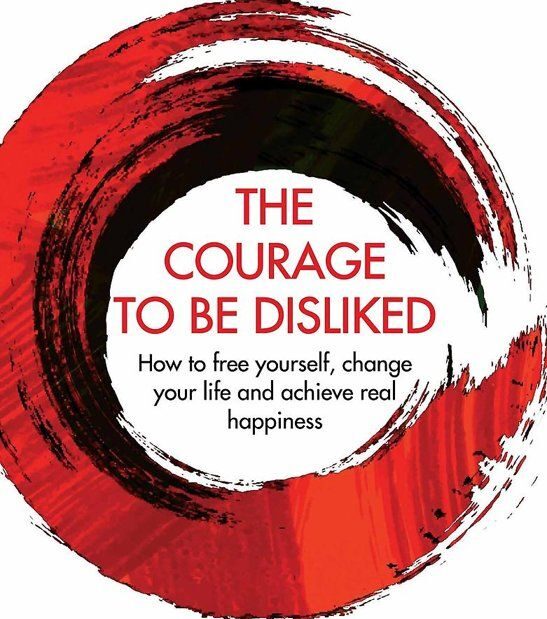
The Courage to Be Disliked is a powerful book about breaking free from other people’s expectations and finding the courage to live life on your own terms. It challenges us to stop seeking constant approval, let go of comparison, and understand that a meaningful life does not require everyone to like us.
There is a quiet question that many of us carry but rarely ask honestly:
Am I living my life, or am I living the life that other people will approve of?
We grow up surrounded by expectations.
Study well.
Get a good job.
Build a successful career.
Get married.
Buy a house.
Look happy.
Make your family proud.
None of these things are necessarily wrong. The problem begins when we slowly stop asking ourselves what we actually want.
Sometimes, we choose a career because our parents believe it is secure. Sometimes, we hide our opinions because we are afraid of being judged. Sometimes, we compare our lives with friends and feel unsuccessful simply because their lives look different from ours.
And sometimes, we become so concerned about being liked, accepted, and understood that we forget what it means to simply be ourselves.
This is the uncomfortable question at the heart of The Courage to Be Disliked, written by Ichiro Kishimi and Fumitake Koga.
Inspired by the psychology of Alfred Adler, the book explores an idea that can feel almost rebellious in today’s world:
You do not need everyone’s approval to live a meaningful life.
Being disliked is not necessarily a sign that you have failed.
Sometimes, it is the price of being free.
1. Are You Living for Yourself or for Other People?
Imagine someone who has spent years preparing for a career they never really wanted.
Everyone around them is proud.
Their family tells relatives about their achievements. Friends admire their position. Their social media profile looks successful.
Yet, every Sunday evening, they feel a strange heaviness because Monday is coming.
From the outside, everything looks fine.
Inside, something feels wrong.
This is one of the most difficult realities of modern life: a life can look successful and still feel deeply disconnected from the person living it.
We often make decisions based on an invisible audience.
What will my parents think?
What will my relatives say?
What will my friends think?
What if people judge me?
What if they think I am unsuccessful?
Slowly, other people’s opinions become louder than our own inner voice.
The Courage to Be Disliked challenges this way of living.
It suggests that freedom begins when we stop making our entire existence dependent on other people’s approval.
This does not mean ignoring everyone.
It means understanding that your life ultimately belongs to you.
2. You Are Not Your Past

One of the most powerful ideas in the book is the rejection of the belief that our past completely determines who we are.
We often tell ourselves stories like
“I am like this because of what happened to me.”
“I cannot trust people because someone hurt me.”
“I am afraid of failure because I failed before.”
“I am not confident because I was criticized growing up.”
Our experiences matter. They can influence us deeply.
But the book asks us to consider something more uncomfortable:
Are we sometimes using our past as an explanation for staying where we are?
Think about someone who was rejected years ago.
They may spend years avoiding relationships because they are afraid of being rejected again.
The original pain happened once.
But the fear continues to make the decision every day.
The past cannot be changed, but the meaning we give to it can change.
This does not mean pretending painful experiences never happened. It means refusing to let them become a permanent definition of who you are.
Your past may explain parts of you.
It does not have to decide the rest of your life.
3. Stop Trying to Be Everyone’s Favorite
There is a strange exhaustion that comes from constantly trying to be liked.
You say yes when you want to say no.
You remain silent when something bothers you.
You change your personality depending on who is around you.
You worry about whether someone misunderstood your words.
You replay conversations in your head:
“Did I say something wrong?”
“Why didn’t they reply?”
“Maybe they don’t like me anymore.”
This is where the idea of being disliked becomes powerful.
The goal is not to become rude or careless.
The goal is to accept that you cannot control everyone’s opinion of you.
Even if you are kind, someone may misunderstand you.
Even if you are honest, someone may disagree with you.
Even if you do everything correctly, someone may still dislike you.
And that is okay.
Trying to make everyone happy is an impossible job because every person carries different expectations.
The moment you understand this, something inside you becomes lighter.
You no longer have to perform a version of yourself for every audience.
You can simply be honest about who you are.
4. Comparison Makes You Forget Your Own Journey
We live in an age where comparison has become almost automatic.
Someone buys a house.
Someone gets promoted.
Someone travels to another country.
Someone starts a business.
Someone gets married.
Someone has children.
Someone becomes financially independent.
Someone appears happy every day.
And suddenly, your own life feels smaller.
But comparison has a hidden problem.
We compare our ordinary reality with someone else’s visible highlights.
We see their achievement but not their anxiety.
We see the photograph but not the difficult years behind it.
We see where they are but not where they started.
Adler’s philosophy, which strongly influences the book, challenges the idea that life is a competition where everyone must reach the same finish line.
Your life does not become less valuable because someone else’s life looks different.
A tree does not become unsuccessful because it grows more slowly than another tree.
Different lives have different seasons.
Maybe your journey is slower.
Maybe it is quieter.
Maybe you are rebuilding something nobody else can see.
That does not make it meaningless.
The purpose is not to defeat other people. It is to live your own life honestly.
5. Your Life Is Your Responsibility
One of the hardest lessons of adulthood is accepting responsibility without turning it into self-blame.
There is a difference between saying:
“Everything is my fault.”
and saying:
“What I do from this point forward is my responsibility.”
The second statement creates power.
You cannot control how your parents raised you.
You cannot control what someone said about you.
You cannot control who left.
You cannot control every opportunity you received or missed.
But you can decide what you do with your life now.
Perhaps you stayed in the wrong situation for too long.
Perhaps you were afraid to start.
Perhaps you spent years seeking approval.
Perhaps you made choices that you regret.
You do not need to spend the rest of your life punishing yourself for them.
Responsibility is not about blaming yourself for everything that happened.
It is about realizing that your next chapter is still in your hands.
6. Freedom Can Feel Lonely
We often imagine freedom as something beautiful.
No expectations.
No restrictions.
No one telling us what to do.
But real freedom can be uncomfortable.
Because once you stop living according to other people’s expectations, you have to make your own decisions.
And that means you can no longer blame everyone else for the direction of your life.
Imagine someone who finally decides to leave a career that makes them unhappy.
Their family may disagree.
Their friends may question the decision.
People may call it risky.
For the first time, they may feel alone.
But loneliness does not always mean you made the wrong decision.
Sometimes, loneliness is simply the space between who you were expected to be and who you are becoming.
Freedom requires courage because there is no guarantee that everyone will understand your choices.
That is why the title of this book is so powerful.
The courage to be disliked is really the courage to remain yourself even when approval is uncertain.
7. You Don’t Have to Become Someone Else to Have a Meaningful Life
Modern self-improvement often tells us that we need to become better.
Work harder.
Wake up earlier.
Be more productive.
Earn more.
Look better.
Achieve more.
Improve yourself constantly.
There is value in growth, but there is also a danger.
We can become so obsessed with becoming a “better version” of ourselves that we start believing our present self is never enough.
The Courage to Be Disliked offers a different perspective.
Perhaps meaningful living is not always about becoming extraordinary.
Perhaps it is about participating in life honestly.
Being present with the people you love.
Doing work that feels meaningful.
Helping someone without needing recognition.
Accepting that you have weaknesses.
Taking responsibility for your choices.
And living without constantly asking whether your life looks impressive from the outside.
You don’t need to become a completely different person to deserve peace.
You need the courage to accept yourself while continuing to grow.
What the Courage to Be Disliked Really Teaches Us
The book’s message is not
“Don’t care about anyone.”
It is not:
“Do whatever you want.”
And it certainly isn’t:
“Be disliked on purpose.”
The deeper message is about separating your life from the opinions that do not belong to you.
Other people have their expectations.
Other people have their judgments.
Other people have their emotions.
Other people have their definition of success.
You can respect them without allowing them to become the owner of your life.
This is difficult because humans naturally want belonging.
We want to be accepted.
We want to be understood.
We want people to appreciate us.
There is nothing wrong with that.
But when the need for approval becomes stronger than our own values, we slowly lose ourselves.
And perhaps that is the real danger—not being disliked, but becoming so afraid of being disliked that we never discover who we actually are.
The Courage to Live Your Own Life
Maybe one day you will disappoint someone.
Maybe someone will misunderstand your decision.
Maybe a friend will not agree with your choices.
Maybe your family will have expectations you cannot fulfill.
Maybe people will compare you with someone else.
And maybe, despite being a good person, someone will still dislike you.
You cannot completely prevent any of this.
But you can choose what happens next.
You can keep changing yourself to fit every expectation.
Or you can slowly develop the courage to stand inside your own life.
That does not mean becoming selfish.
It means becoming honest.
Because at the end of the day, you are the person who has to live with your choices.
Not your relatives.
Not your neighbors.
Not your followers.
Not society.
You.
Perhaps the greatest freedom is not having everyone understand you.
Perhaps it is reaching a point where you no longer need everyone to.
And maybe the courage to be disliked is, at its deepest level, the courage to live a life that feels like yours.
You don’t have to be liked by everyone to live a life worth living.