

According to a 2024 global report by Gallup, only 23% of people worldwide are truly engaged in their work—and this is exactly where the idea of Why Your Life Feels Incomplete Even After Doing Everything Right begins to make sense.
This doesn’t mean the remaining people aren’t working. It simply means that most are working out of pressure, obligations, or expectations—not from the heart.
If we look at it from a societal perspective, this pressure becomes even more visible. From a young age, men are taught that after getting a good education, it is their responsibility to secure a high-paying job—”You have to earn; only then do you have value.” On the other hand, women are told that to be independent and strong, they must be successful in their careers—and a “strong woman” is often defined as someone who manages both home and job perfectly.
Over time, these expectations stop being choices and turn into silent pressure. People don’t really choose their work—they simply carry it. And in this process, work stops being a purpose and becomes an obligation. A person may be physically present, but mentally, they are somewhere else.
If you are reading this and feel that you are part of the 77% who are not truly engaged, pause for a moment. This does not mean you are weak or incapable. It simply means that perhaps you haven’t yet chosen the path that truly belongs to you.
If today we find ourselves outside that 23% who are truly engaged in their work, it is not entirely our fault. A person can only grow as much as they are exposed to—just like you can only swim as far as the water allows. From childhood, we are shown a limited world where success is defined by just 10–15 career options—doctor, engineer, CA, or government job—and gradually, we begin to believe that these are all that exist.
But the reality is much bigger. Today, there are more than 12,000 career options in the world, yet most of us were never told about them. The problem is not the lack of opportunities—it is the lack of awareness. That is why millions of people keep walking on the same path, without realizing that their true potential might lie somewhere else.
At this stage in life, taking a complete U-turn is not easy. Everyone has responsibilities, needs, and a comfort zone that feels safe. So, it is not practical for everyone to suddenly leave everything and chase their dreams—and that’s okay.
But this does not mean you have to stay stuck in the 77% forever. Life is not always about extreme decisions; there is always a middle path. Along with your job, you can start doing something that makes you feel alive from within—something that slowly moves you toward that 23%.
Because the truth is, you don’t need to change your entire life at once. Sometimes, just one small thing done from the heart can change the way your whole life feels.
Passion: From Myth to Reality (A Practical Framework)
We often hear, “Follow your passion.”
But rarely do we stop and ask, “What is passion, really?”
This is where “So Good They Can’t Ignore You“ presents an uncomfortable but powerful truth: passion is not the starting point; it is the result.
In simple words, passion is not something you find…
It is something you build.
सबसे खतरनाक होता है मुर्दा, शांति से भर जाना
न होना तड़प का, सब कुछ सह जाना
घर से काम पर निकलना, और काम से घर आना
सबसे खतरनाक होता है हमारे सपनों का मर जाना
Passion: Clear, Practical & Easy to Follow
1. The Real Formula of Passion (Clarity)

Passion = Mastery + Autonomy
- Mastery → Becoming so good at a skill that your value is visible
- Autonomy → Having the freedom to work in your own way
When these two come together, work stops feeling like just a job and starts feeling meaningful.
2. Talent Is Built Through Practice
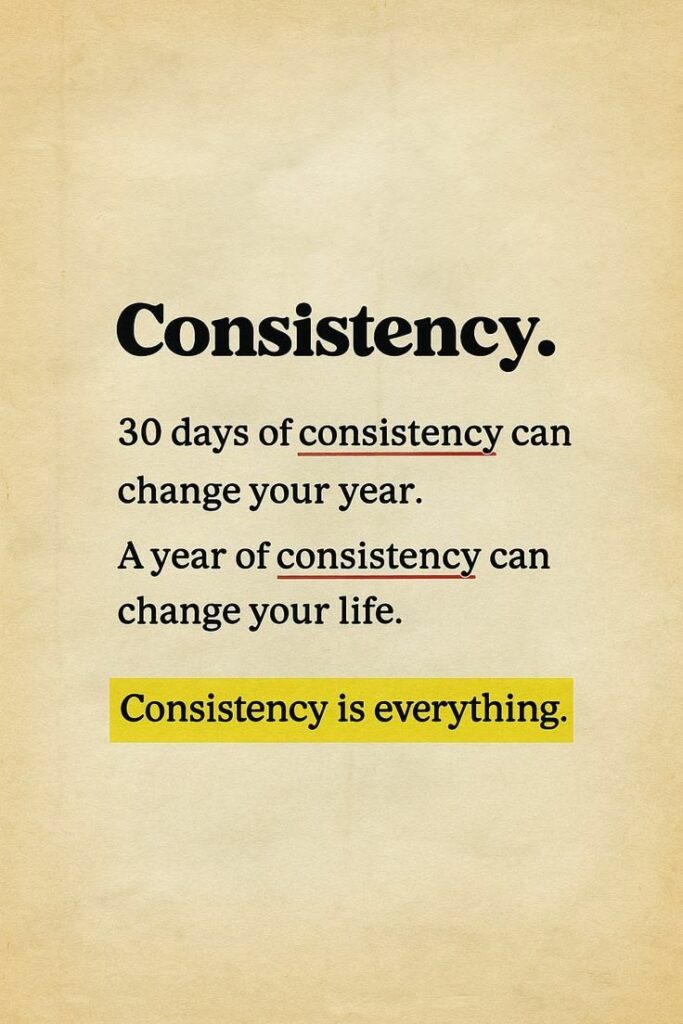
The core idea is simple:
- In the beginning, you don’t have clarity—only curiosity
- Repetition builds skill
- And over time, that skill starts looking like “talent.”
20-Hour Rule (Practical Start):
If you give 20 focused hours to any skill,
You move beyond the beginner stage—and that’s where real interest begins.
3. The Real Predictor of Success
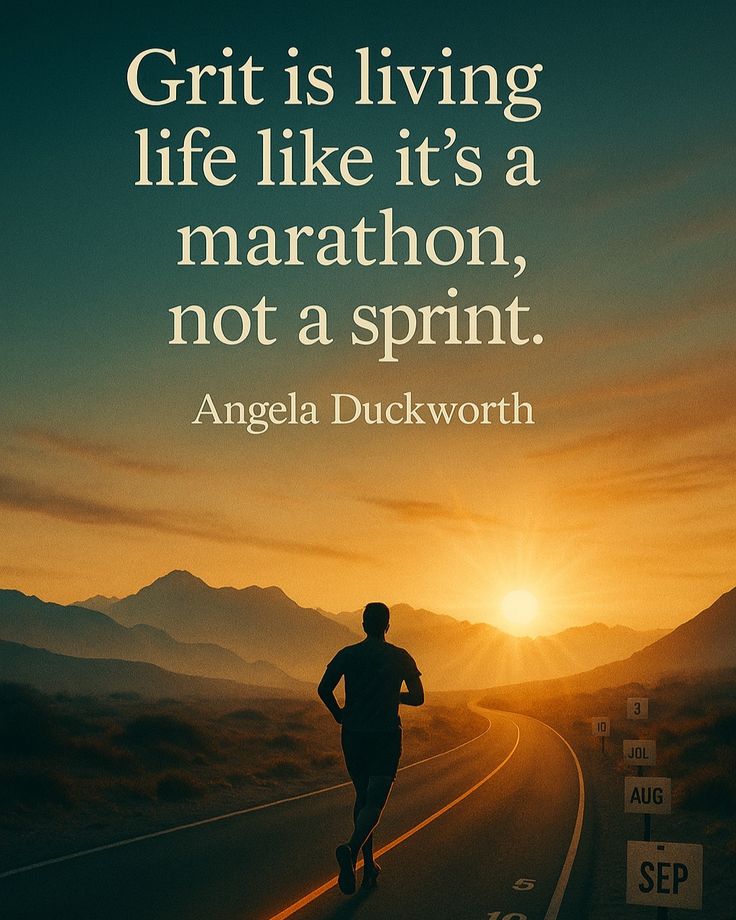
It’s not IQ. It’s not raw talent.
But the biggest factor is GRIT, a concept by Angela Duckworth
Grit = Passion + Perseverance
Meaning: interest + long-term consistency
4. The 3E Formula (30-Day Action Plan)
Explore → Engage → Excel
- Explore: 30 days
Try new things daily for 30–60 minutes - Engage: 30 days
Go deeper into 1–2 things you naturally enjoy - Excel: 30 days
Practice daily, take feedback, improve gradually
You won’t see miracles in 90 days—
But you will start gaining clarity.
5. Practical Shift (Don’t Quit—Adjust Your Approach)
- Keep your job, but build a skill 1 hour daily
- Use weekends to explore (courses, projects, communities)
- Create some output every 2 weeks (posts, designs, small projects)
- Build one visible skill in 90 days
One honest hour a day = a long-term identity shift
6. What to Remember
- Passion is not a feeling—it’s a process
- Clarity doesn’t come from thinking—it comes from doing
- Small consistency is more powerful than big motivation
7) Find Ikigai
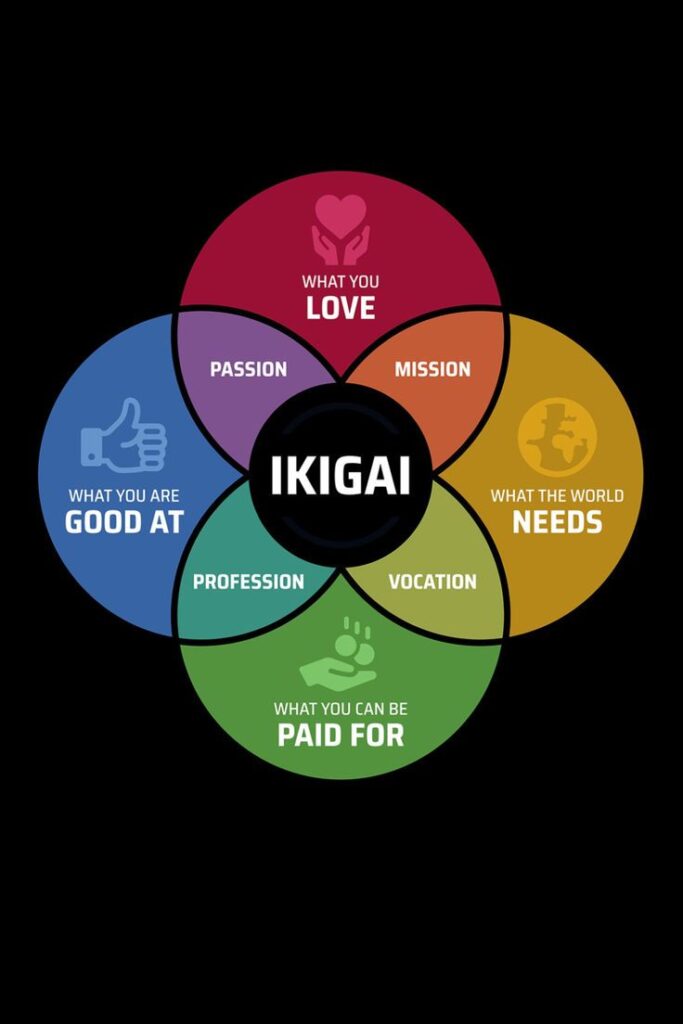
Ikigai is a Japanese concept that means “a reason for being”—the reason you wake up each morning with a sense of purpose.
It is built on four simple but powerful elements:
- What you love
- What you are good at
- What the world needs
- What you can be paid for
When these four come together, something powerful happens—
Your work stops feeling like just a routine and starts feeling meaningful.
Instead of chasing success in only one direction, Ikigai helps you align your passion, your skills, your purpose, and your income.
It creates a balance where you don’t just work to survive—you begin to live with intention.
And maybe that’s what’s missing—
not success, not effort…
but alignment.
Because when your life is aligned,
you don’t just feel productive—
You feel complete.
If you give yourself just 20–25 minutes every day—to do something that genuinely feels good from within, something your heart connects with—a quiet shift begins. This change doesn’t start outside; it begins within you. When you take out even a little time for yourself, your mind becomes calmer, stress reduces, and you start gaining clarity in your work as well. That’s why even from a scientific perspective, giving time to your interests and inner satisfaction improves your overall well-being—and slowly, you begin to accept and even enjoy your regular work more than before.
The truth is, your job doesn’t change, and your circumstances don’t change—your mind does. And when your mind changes, the same routine, the same work that once felt like a burden, no longer feels so heavy. That’s why it is said,
“When the mind is at peace, everything feels right.”
Helpfully Blog
[…] Every religion teaches the value of human life. […]