
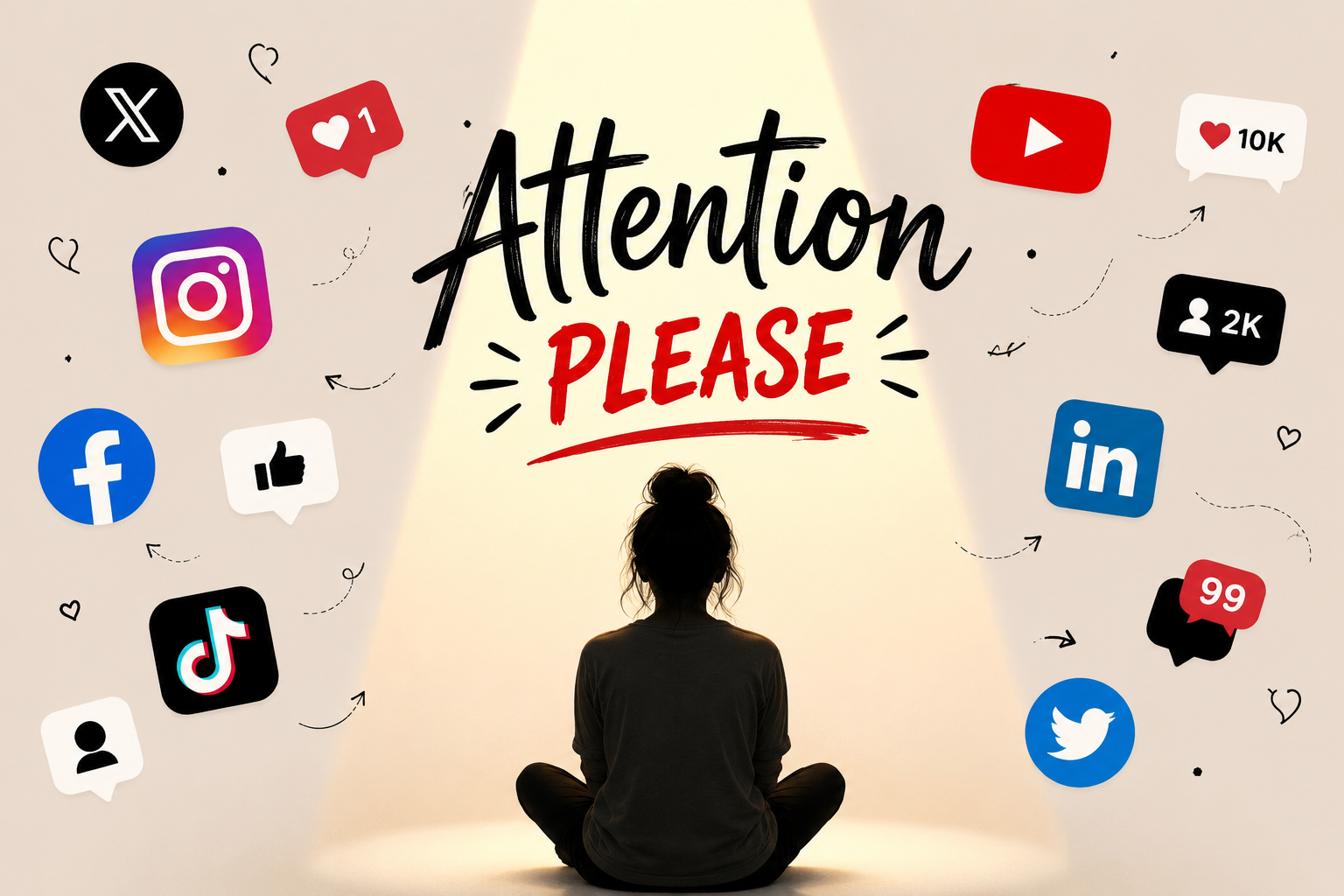
The Attention Crisis: The World Has Moved from “Log Kya Kahenge?” to “Look at Me.” There was a time when people constantly worried about “What will people say?” Society’s judgment influenced the way they lived, spoke, and made decisions. Today, the situation has changed dramatically.
Today, the world feels completely different. People are no longer worried about being seen; they are worried about not being seen. In the age of social media, attention has become a form of validation. The saddest part is that many people are willing to lose their dignity for attention yet feel nothing about it. We may have escaped the fear of judgment, but many of us have become trapped in the endless pursuit of attention.
But when I look at the kind of confidence that is often celebrated on social media today, it makes me think deeply. There is a difference between confidence and overconfidence. Confidence helps a person express themselves while remaining aware of their actions and their impact on others. Overconfidence, on the other hand, often ignores limits and consequences.
What we are seeing today seems to be something beyond even overconfidence. Many people say whatever comes to their mind, share whatever gets attention, and act without considering the consequences. They rarely stop to ask, “Is this true?”, “Will this help anyone?”, or “How might this affect others?”
The goal is no longer just self-expression; it is visibility. In the age of social media, many people desperately want to be seen, noticed, and talked about. Attention has become so valuable that some are willing to cross boundaries they once would have respected. The desire for attention is becoming stronger than the desire for understanding, responsibility, or even self-respect.
When Attention Becomes a Performance
1. Respect Has Been Replaced by Attention
In the past, people wanted to earn respect. Respect required patience, character, knowledge, and meaningful contributions. It was built slowly over time and often lasted for years.
Today, attention can be gained in seconds. A controversial statement, a shocking video, or a dramatic opinion can attract thousands of views overnight. As a result, many people are no longer focused on becoming valuable; they are focused on becoming visible.
The problem is that attention and respect are not the same thing. Attention is temporary. Respect is lasting. Yet modern culture increasingly rewards visibility over value, making attention more desirable than respect itself.
2. Negative Attention Is Still Attention
There was a time when being criticized or publicly embarrassed was something people tried to avoid. Today, many people willingly invite controversy because they know it increases visibility.
Social media algorithms do not always reward wisdom, kindness, or truth. They reward engagement. The more people react, argue, criticize, or share something, the more attention it receives.
As a result, many people have stopped asking, “Is this meaningful?” and started asking, “Will this get attention?”
This shift is dangerous because it teaches people that being talked about is more important than being respected.
3. We Are Living in the Attention Economy
Attention has become one of the most valuable resources in the modern world. Every app, platform, advertisement, and notification is competing for it.
Social media companies do not simply provide content; they compete to keep people engaged for as long as possible. The longer people stay, the more advertisements they see and the more profit is generated.
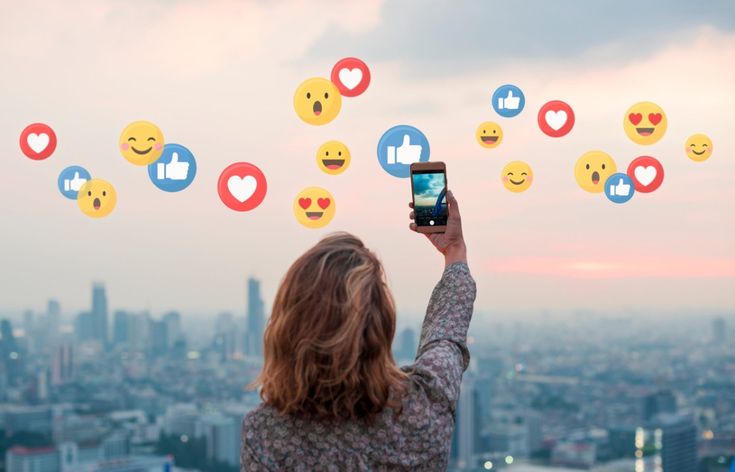
In this environment, attention is treated like a currency. Views become social proof. Likes become approval. Followers become status symbols.
Without realizing it, many people begin measuring their worth through numbers on a screen rather than through their real-life relationships, character, achievements, or personal growth.
4. A Generation Is Growing Up Believing Visibility Equals Value
Perhaps the most concerning consequence of the attention economy is its impact on younger generations.
Many children are growing up in a world where popularity is constantly measured. They can instantly see who has more followers, more likes, and more engagement. From an early age, they are exposed to the idea that being noticed is the same as being important.
Over time, this creates a dangerous belief: “If nobody is paying attention to me, do I still matter?”
Human value was never meant to be determined by an audience. Yet many young people are growing up feeling that their self-worth depends on digital attention rather than personal growth, meaningful relationships, or inner character.
5. When Attention Becomes an Identity
Attention is a natural human need. Everyone wants to feel seen, heard, and appreciated. The problem begins when attention stops being a need and becomes an identity.
Today, many people feel uncomfortable when they are not being noticed. Silence feels like rejection. Being ignored feels like failure. As a result, they constantly seek new ways to stay visible, relevant, and talked about.
Over time, the desire for attention can become endless. No amount of likes, views, followers, or recognition feels enough because attention provides only temporary satisfaction.
When a person’s sense of worth depends on attention, they slowly lose touch with who they truly are. Instead of asking, “Who am I?” they begin asking, “How can I get people to notice me?”
And that is when attention stops being a tool for connection and starts becoming an addiction.
How We Are Losing Ourselves in the Search for Attention

Human beings have always needed attention. From childhood, attention helps us feel safe, loved, and accepted. In healthy amounts, attention is not a problem—it is a basic human need.
The problem begins when attention stops being a need and becomes a source of identity.
Attention addiction is not just changing our behavior—it is slowly making us lose our core values. In the constant pursuit of attention on social media, many of us have forgotten how to truly understand and feel ourselves. We are so busy being seen by others that we rarely pause to ask what we genuinely think, feel, or believe.
One of the biggest dangers is that the line between right and wrong starts becoming blurry. If you do something wrong, there will still be people who support you. If you do something right, there will also be people who support you. No matter what you do, there is almost always an audience waiting on both sides. In today’s digital world, even harmful behavior can receive attention, applause, and encouragement. Perhaps that is why many people continue believing they are right even when they are clearly moving in the wrong direction.
This message is for Gen Z.

The situation becomes even more dangerous when attention turns into criticism, trolling, or public judgment. Suddenly, a person feels as if they are standing in the middle of an ocean, surrounded by water on all sides with no shore in sight. Not everyone knows how to swim through that storm. Some lose their confidence, some lose their peace, and sadly, some even lose their lives.
That is why attention itself is not the enemy. Wanting to be seen, heard, and valued is completely human. Be confident. Express yourself. Share your voice. But do it with understanding, responsibility, and awareness. Before doing anything, take a moment to think about its impact, its benefits, and its consequences. Most importantly, never let the pursuit of attention make you forget your humanity.
At the end of the day, likes, views, and followers may come and go, but your character, values, and the way you treat other people are what truly define who you are. Always choose to be not just a visible person but also a good human being.
Thank you for reading and reflecting on this journey with me. 💛
Think Beyond, Live Beyond. 💛